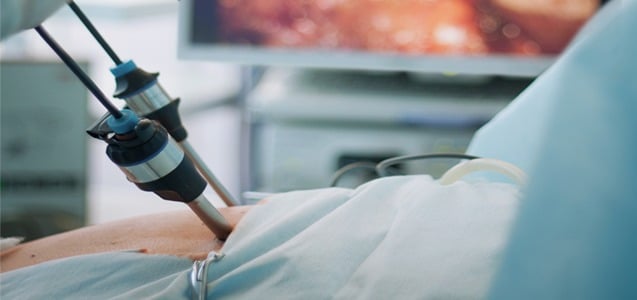
Perforation of Small Intestine During Laparoscopic Cholecystectomy

Laparoscopic cholecystectomy, commonly referred to as a “lap choly,” is a procedure that involves removing the gallbladder. A patient may need removal if the gallbladder is full of gallstones (cholelithiasis), inflamed, or infected (cholecystitis). When a lap choly is needed, laparoscopic techniques are used to perform this minimally invasive surgery with the assistance of a video camera and several thin instruments.

The laparoscopic incisions, each one about ½” in size, limit the surgeon’s view of the patient’s abdomen. This limited view during surgical dissection and electrocautery can be associated with serious complications. Several factors may play a role in causing these injuries, such as the complexity of the case and the experience of the surgeon.

Although injury to the common bile duct (the tube that carries bile from the gallbladder to the small intestine) is one of the most serious complications of gall bladder surgery, injury to the small bowel (small intestine) can occur as a result of a medical provider’s incorrect use of surgical tools during laparoscopic cholecystectomy.  Perforation or laceration of the small intestine during lap choly can occur when the nearby wall of the small intestine is cut by a surgical tool or burned during electrocautery.  If left undetected and not quickly repaired, a hole in the small intestine can cause bile to leak into the abdomen and can lead to life-threatening infection (abscess, peritonitis and sepsis). The duodenum (upper section of the small intestine) or jejunum (the middle portion of the small intestine) are the two most likely sections of the small intestine to be negligently damaged during laparoscopic gall bladder surgery.

Before laparoscopy is performed on a patient, the patient must be properly evaluated, including a full clinical history and thorough clinical examination. If you would like to discuss your potential claim arising from an intestinal injury during laparoscopy, the attorneys at Yost Legal Group are experienced professionals ready to investigate your claim with compassion and determination.

Call The Yost Legal Group today at 1-800-YOST-LAW (967-8529) for a FREE, confidential, no-obligation consultation. At The Yost Legal Group, there is no fee or expense unless you recover.
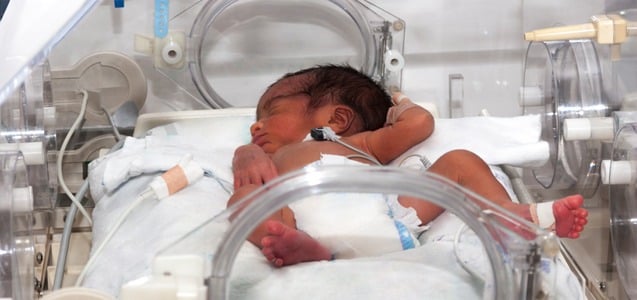
Spastic Cerebral Palsy at Birth

Spastic cerebral palsy is a permanent loss of muscle control caused by an injury to the brain resulting from a variety of causes, one of which is a lack of oxygen to the baby during labor and delivery.

Spastic CP is characterized by involuntary movement of the arms and legs, uncontrolled muscle spasms and can also affect the muscles controlling speech and swallowing.  Spastic CP can affect all four limbs, neck and torso (tetraplegia), both arms and both legs (quadriplegia), or only one arm or leg (monoplegia) but most commonly affects the arm and leg on one side of the body, only (hemiplegia).  Less commonly, spastic quadriplegia can affect three limbs (triplegia).

Poor coordination and balance, a complete inability to relax tightened muscles, difficulty walking, talking and eating are all common complications of spastic CP.  For those who suffer from this neurological disorder, affected joints become very stiff and hard to move.  Over time, the affected arms or legs may become extremely painful and interfere with the ability to function independently or even to sit in a comfortable position

Birth injuries, such as spastic cerebral palsy, can be the direct result of medical negligence.  It is important for medical providers to consistently monitor the baby’s heart rate and the mother’s contraction rate to identify if the baby is experiencing a lack of oxygen during the entire course of labor and delivery. If a complication, such as a very low (bradycardia) or very high (tachycardia) fetal heart rate is identified in a timely manner, medical providers can respond immediately to fetal distress.  A baby’s lack of oxygen during labor and delivery is an obstetrical emergency and can result in permanent brain injury such as spastic CP.

There are a number of treatments available for the management of spastic CP. However, the cost of care for a child with cerebral palsy, or any brain damage, is very high. If your child’s brain injury was caused by a medical mistake, the experienced Birth Injury lawyers at The Yost Legal Group are here to help.

Call The Yost Legal Group today at 1-800-YOST-LAW (967-8529) for a FREE, confidential, no-obligation consultation. When you call, you will speak with a Baltimore Birth Injury attorney with real experience absolutely free. At The Yost Legal Group, there is no fee or expense unless you recover.

Cardiac Arrest During Spinal Block

While general anesthesia is used for many surgical procedures, and local anesthetics are usually given by injection into a very specific part of the body that needs to be numbed, an injection of numbing medication into a patient’s back allows a whole region of the lower body to be pain-free without putting the patient to sleep during some abdominal surgeries, leg and feet surgeries or other lower body procedures, such as urinary tract procedures. Spinal block is also the preferred method of controlling pain during labor and delivery.

Spinal anesthesia is performed by an anesthesiologist (a doctor who specializes in administering all types of anesthesia to patients) who injects the medication just outside or just inside the membrane surrounding the spinal cord.  If the numbing medication is injected just outside of the membrane that holds the spinal fluid, it is known as an epidural injection.  If the anesthetic is injected directly into the spinal fluid it is known as a spinal injection. Epidural injection is placed using a small, soft tube (catheter) and can be injected into the patient’s back at either the upper (cervical), middle (thoracic) or lower (lumbar) region.  Spinal injection uses a needle to enter the spinal fluid and can only be inserted in the lower (lumbar) spine to avoid puncturing the spinal cord with the sharp needle.

Epidural and spinal anesthesia work fast to numb the abdomen, legs and feet by blocking nerve signals. A patient will begin to feel the effects of an epidural or spinal injection within just a few minutes and will typically experience complete lower body numbness, and no pain, within twenty minutes.

Handled properly, epidural and spinal blocks offer anesthesia quickly and efficiently. However, if the injection is given in the wrong place (wrong site) or if too much medication is injected (an overdose) respiratory and cardiac arrest can occur. For example, if the anesthesia spreads above or below the intended spinal level, it can block nerves responsible for signaling the heart to beat and cause a dangerous slowing of the heartbeat (arrhythmia or bradycardia), a severe drop in blood pressure (hypotension) or a cardiac arrest.  Similarly, if the medication is incorrectly injected into a blood vessel it enters the bloodstream, travels throughout the body (systemic toxicity) and can interfere with the patient’s heart rate, breathing and blood pressure. This may cause heart damage, a brain injury or even death, by significantly affect the following:

  • Heart
  • Breathing
  • Brain function

Because of the risks of life-threatening complications during epidural and spinal anesthesia, equipment for emergency care (such as a defibrillator and injections of vasopressor medications) must be readily available and the attending healthcare providers must be prepared to immediately recognize and treat these complications. If you have been injured as a result of an epidural or spinal block the attorneys at Yost Legal Group are ready to investigate your claim with compassion and determination.

Call The Yost Legal Group today at 1-800-YOST-LAW (967-8529) for a FREE, confidential, no-obligation consultation.

At The Yost Legal Group, you will never pay an attorney’s fee unless we achieve a recovery for you. We don’t get paid until you do.

Uterine Rupture and Birth Injury

Uterine rupture in pregnancy can be life-threatening for the mother and baby. Signs and symptoms associated with uterine rupture should be identified by a medical provider through careful monitoring of the mother and baby during labor and delivery, and include:

  • Significant uterine bleeding
  • Severe chest pain or abdominal pain
  • Falling blood pressure in the mother
  • Abnormal or absent pattern of uterine contractions (visible on the fetal monitoring strip)
  • Abnormal fetal heart rate (visible on the fetal monitoring strip)

If the uterus ruptures, the baby may not be getting the amount of oxygen needed to survive. This obstetrical emergency requires an immediate caesarian section (C-section) delivery. If the symptoms of uterine rupture are not recognized and immediately treated by medical providers, the complete (anoxia) or partial (hypoxia) interruption in the baby’s supply of oxygen can cause permanent brain damage.

Hypoxic and anoxic brain injuries can cause disabilities such as cerebral palsy, delays in development and seizure disorders. If you would like to discuss your child’s potential brain damage claim arising from a uterine rupture during labor and delivery, the attorneys at Yost Legal Group are experienced professionals ready to investigate your claim with compassion and determination.

Call The Yost Legal Group today at 1-800-YOST-LAW (967-8529) for a FREE, confidential, no-obligation consultation.

At The Yost Legal Group, you will never pay an attorney’s fee unless we achieve a recovery for you. We don’t get paid until you do.

Placenta Previa and Hypoxic Brain Injury

Placenta previa occurs when the placenta lies low in the uterus and partially or completely covers the cervix.  When this happens, the placenta is lying between the fetus and the birth canal, effectively blocking the baby’s delivery. Although placenta previa is quite common in the early weeks and months of pregnancy, it typically resolves as the pregnancy progresses and the placenta moves up and away from the cervix as the uterus expands.

However, placenta previa does not always resolve itself. It affects about 1 in 200 births, at which time it can create the risk of severe bleeding (hemorrhage) in the mother and lack of oxygen to the baby (hypoxia). When placenta previa is present near the end of pregnancy it almost always requires cesarean (c-section) delivery of the baby.

Placenta previa should always be suspected when bright red vaginal bleeding occurs during pregnancy, at which time an ultrasound should be ordered and the condition can be diagnosed by the ultrasound images.  If ultrasound confirms placenta previa is the cause of vaginal bleeding during pregnancy, the proper course of treatment is to admit the patient to the hospital for monitoring and bedrest. If the bleeding does not stop, or if the fetal heartrate monitor indicates the baby is in distress, the pregnant mother will remain hospitalized and may receive blood transfusions and other treatments until the baby is delivered.

Lack of oxygen to the baby’s brain due to a ruptured placenta previa can cause serious brain damage. Birth asphyxia, hypoxic ischemic encephalopathy (HIE) and cerebral palsy are brain injuries that are caused by oxygen deprivation. The treatment for these complications is limited due to the fact that most brain damage is permanent.

Our experienced attorneys fight for individuals who have been negatively impacted by the negligence of others.  If you would like to discuss your family’s potential claim arising from a placenta previa birth injury, the attorneys at Yost Legal Group are experienced professionals ready to investigate your claim with compassion and determination. For a free consultation, please call us at 1-800-YOSTLAW.

Perinatal Hypoxia and Blindness in Newborns

According to the NCBI (National Center for Biotechnology Information), damage to the brain is the most common cause of visual impairment in children in developed countries. Blindness caused by brain injury during a baby’s labor and delivery (the perinatal phase of birth) occurs when the baby’s oxygen supply is severely interrupted for a long enough period of time to cause damage to the brainstem or visual cortex (also called the occipital lobe), which are the parts of the brain primarily responsible for eyesight.

Not only can perinatal hypoxia and asphyxia (shortages of oxygen) cause blindness (cortical blindness), but oxygen deprivation during labor and delivery causes other severe birth injuries, such as cerebral palsy (CP) and other neurologic disabilities in children.   These injuries may have been the result of poor fetal monitoring or a lack of discovery of potential birth complications by medical providers.

Cortical (or cerebral) blindness and cerebral palsy cannot be cured but treatment will very often improve a child’s capabilities and in general, the earlier treatment begins the better chances are that children will overcome developmental disabilities.

If you would like to discuss your child’s potential birth claim arising from cortical blindness or CP, the attorneys at Yost Legal Group are experienced professionals ready to investigate your claim with compassion and determination.

Call The Yost Legal Group today at 1-800-YOST-LAW (967-8529) for a FREE, confidential, no-obligation consultation.

At The Yost Legal Group, you will never pay an attorney’s fee unless we achieve a recovery for you. We don’t get paid until you do.


ERB’S PALSY

Welcoming a new baby into the world can be one of the happiest days of your life. The most important and desired outcome on that special day is of course, a safe delivery, free of any harm to the baby and mother.  Unfortunately, this is not always the case.

A birth injury, characterized by damage to a baby’s brain or body function due to a harmful event that occurred at birth, may be the result of a medical mistake. Erb’s palsy, a disorder sometimes referred to as shoulder dystocia or brachial plexus palsy, is the result of damage to some, but not all, of the nerves which form the brachial plexus, a bundle of nerves responsible for moving the shoulder, arm, wrist and fingers.  Most typically, the Erb’s Palsy injury is a “stretch injury” (neuropraxia), but sometimes the injury involves torn nerve fibers, a completely torn nerve (nerve rupture) or, a nerve root torn from the spinal cord (nerve avulsion).  Erb’s Palsy is very often caused when the baby has been unnaturally or too forcefully pulled, twisted or jerked by a medical provider during the delivery period.

This harmful mistake causes significant injuries to the baby’s neck, injuring nerve roots C5 and C6, with C7 also affected in 50% of instances. Evident signs that a newborn has suffered an injury related to Erb’s palsy are as followed:

  • Inability to move arm or shoulder
  • Arm hangs limp with wrist and hand turned inward
  • Weak or absent reflexes
  • Decreased grip strength

If left untreated, Erb’s palsy may lead to:

  • Partial or full paralysis of arm and shoulder
  • Limited growth of the arm and hand
  • Permanent arm weakness and numbness
  • Deteriorating muscles (Muscle atrophy)

Although it may be possible for Erb’s palsy to resolve completely in the first year the infant’s life, no child should have to experience these devastating circumstances. Furthermore, if proper care is not administered after the preventable birth injury took place, your child may be permanently disabled.

If your child’s injury was caused by a medical mistake, the experienced Birth Injury lawyers at The Yost Legal Group are here to help.

Call The Yost Legal Group today at 1-800-YOST-LAW (967-8529) for a FREE, confidential, no-obligation consultation. When you call, you will speak with a Baltimore Birth Injury attorney with real experience absolutely free.

If we take your case, our legal team will investigate every detail surrounding your child’s birth injury and will help provide the answers you seek. Lastly, at The Yost Legal Group, you will never pay an attorney’s fee unless we achieve a recovery for you. We don’t get paid until you do.

PREVENTABLE MEDICAL MISTAKES IN HOSPITALS

Hospital-acquired conditions, also known as “never events”, are particularly awful medical mistakes that should not ever occur. Some examples of these preventable errors include:

  • Operating on the wrong place on the patient’s body
  • Discharging a newborn to the wrong parents
  • Leaving a foreign object, such as a scalpel or sponge, inside the body
  • Mismatched blood transfusion
  • Causing an air embolism during treatment of a patient

Unfortunately, not all medical mistakes are avoidable at all times. In 1999, the Institute of Medicine (IOM) reported medical errors account for as many as 98,000 deaths per year. A more recent study specific to surgical errors conducted in 2013, found that more than 4,000 surgical “never events” occur annually in the United States.

Due to the fact that these events are preventable, health care organizations are attempting to get rid of them completely and health insurance providers, including Medicare and Medicaid, are no longer paying for costs related to hospital-acquired conditions (HACs). Also, many of these “never events” are being openly reported by the public. All of these strategies aim to inspire hospitals and medical professionals to accelerate the progress of patient safety.

Never events within hospitals can point to a major safety problem within an organization. It has been reported these error rates are much higher in the U.S. than in other developed countries such as United Kingdom, Germany, Canada, New Zealand and Australia. Some states, such as Minnesota (the first state to pass a statute that required obligatory reporting), have enacted legislation requiring reporting of hospital-acquired conditions but not all states are required to do so. It has been up for debate whether or not required reporting of HACs has affected how frequently they occur.

As the term “never events” indicates, these events should under no circumstance be occurring however, they continue to occur. If you or a loved one feel you are the victim of a medical mistake contact The Yost Legal Group today at 1-800-YOST-LAW (800-403-7259). When you call, you will speak with an experienced Baltimore Medical Malpractice attorney absolutely FREE.

The attorneys at Yost Legal Group are experienced, caring professionals ready to investigate your claim with compassion and determination. Call us today to receive a free, confidential consultation about your possible case.

At The Yost Legal Group, we will investigate every detail of your situation at no cost to you, and fight hard to ensure that your rights are protected.

We handle all cases on a contingency fee basis. This means you will never pay an attorney’s fee up front, and you owe us nothing unless we win your case.


The Causes of a Traumatic Brain Injury

Headaches, dizziness, concussion, loss of consciousness, forgetfulness, depression and nausea are some of the symptoms of traumatic brain injury. Traumatic brain injuries, or concussions, can be caused by blunt force to the head. According to the Centers for Disease Control, car accidents are one of the leading causes of traumatic brain injuries. Car accident victims who hit their heads on headrests, steering wheels, windows or windshields may have traumatic brain injuries. Even if a car accident victim does not hit their head, they could have a traumatic brain injury from the movement their head made at the time of impact.

Unlike other injuries from car accidents, a victim may not notice the signs of a traumatic brain injury for several days or even weeks. Even if a victim has a normal MRI or CT scan they could still have a traumatic brain injury or concussion. Doctors diagnose traumatic brain injuries by evaluating the symptoms a patient is experiencing.

The effects of a traumatic brain injury can be permanent or long-term. The treatment for traumatic brain injuries may include medications, speech therapy, occupational therapy, psychological therapy and, in severe cases, surgery.

If you believe you or a loved one are suffering from a traumatic brain injury, you should:

Seek Medical Treatment:  A doctor may order MRIs and CT scans to determine if there are skull fractures, bruising, or swelling around the brain. A doctor will also review your symptoms to determine whether a traumatic brain injury is likely.

Document Symptoms: Keep track of your symptoms so that you can tell your doctor about headaches, memory problems, emotional problems, nausea, difficulty speaking, dizziness, or any other symptoms you are experiencing.

The Yost Legal Group is here to help auto accident victims diagnosed with traumatic brain injuries. If you or a loved one is seriously injured in a car accident that was not your fault, call The Yost Legal Group at 1-800-YOST-LAW (967-8529). When you call, you will speak with an experienced, compassionate Maryland Car Accident lawyer absolutely FREE.

We will investigate every detail of your accident and fight hard to ensure that your rights are protected. At The Yost Legal Group, you will never pay an attorney’s free up front and we don’t get paid until you do.


Pets Deserve Legal Protection Too

According to the American Veterinary Medical Association (AVMA) more than 60% of Americans have a pet and more than 35% of pet owners consider their pet to be a member of their family. Despite these statistics, Maryland has done little to enact and enforce laws designed to protect pets.

As in other states, it is a crime in Maryland to abuse or neglect an animal. Maryland is lenient on animal abusers though, with a maximum sentence for animal neglect or animal cruelty of 90-days versus six months to one year in many other states.

This year, the Maryland Legislature is considering several laws aimed at protecting animals, including:

  • A law that would require veterinarians to report suspected cases of animal cruelty;
  • A law that would require licensing of commercial breeders;
  • A law that would require animals no longer needed for research purposes to be made available for adoption; and
  • A law that would give judges the ability to order defendants in animal abuse cases to pay for the cost animal shelters incur caring for animals seized.

Additionally, if a pet is injured in Maryland as a result of someone else’s negligence, § 11-110 of the Courts & Judicial Proceedings Article caps the recovery at $7,500. This means that if you successfully sue the person who hurt your pet you cannot get more than $7500, regardless of the severity of the injury or the amount of your vet bills or other expenses. The cap on damages for cases involving injured pets fails to recognize that many pet owners consider their pet to be a part of their family.

Deterrence is one of the goals of both the criminal and civil justice systems. Maryland’s leniency towards people who hurt animals fails to properly deter people from abusing or neglecting animals and must be rectified.

If you or a loved one of any species is seriously injured and it was not your fault, call The Yost Legal Group at 1-800-YOST-LAW (967-8529). When you call, you will speak with an experienced, compassionate Maryland lawyer absolutely FREE.

We will investigate every detail of your case and fight hard to ensure that your rights are protected. At The Yost Legal Group, you will never pay an attorney’s free up front and we don’t get paid until you do.

The Yost Legal Group – Experienced Attorneys Dedicated to Protecting Your Rights