People Are Injured Every Day Due to Distracted Driving Across Maryland

Distracted driving is a selfish decision that thousands of Americans make every day. When drivers choose to be distracted on their phone instead of concentrating on the road, they are not only putting their own lives on the line, but also the innocent lives of motorists and pedestrians around them.

Looking at Maryland specifically, it was found that 80 people are injured everyday due to distracted drivers. Not to mention there are 53,000 distracted driving crashes in Maryland every year that result in 28,874 injuries. These alarming numbers shed light on how serious distracted driving can be and the deadly consequences associated with it.

Texting used to be the culprit behind distracted driving, but it has now expanded to social apps such as Snapchat, Facebook, Instagram, Google Maps and Spotify to name a few. Below are some shocking statistics that expose the dangers associated with distracted driving:

  • 9 people are killed every day by distracted driving across the U.S
  • 70% of teens admit to using mobile apps while driving
  • 48% of adults admit to texting and driving even though they know it is unsafe
  • The risk of being in an auto accident is increased 4x when you pick up your mobile device

To read more about distracted driving in Maryland, click here.

At The Yost Legal Group, we want all Maryland motorists to drive as safe as possible. That means never using your mobile device while operating a vehicle. It is that simple.

The Governor’s Highway Safety Association advises these following tips to keep yourself and others safe on the road:

  • Turn off your phone. Turn off your phone or put it in silent mode before you get in the car, then stow it away out of your reach.
  • Pull over. If you ever need to make a call or send a text, reduce your risk of getting in an accident by pulling to a safe spot on the side of the road.
  • Use passengers. Ask a passenger in your vehicle to make a call for you or shoot a text, as well as navigate directions for you if needed.
  • Refrain from eating, drinking, reading, grooming and smoking. These activities distract you from the road and increase your odds of being in an accident.

If you or a loved one has been injured by a distracted driver or in any type of motor vehicle accident that was not your fault, call The Yost Legal Group for help and guidance. We have years of experience dealing with all types of Auto Accident and Injury cases, and we promise to represent your rights to the fullest.

Call The Yost Legal Group today at 1-800-YOST-LAW (967-8529) to speak with an experienced, dedicated and compassionate car accident attorney about your case. You will receive a FREE, confidential consultation with a Baltimore Auto Accident attorney. If you’ve been injured, don’t wait. Call today.

The Yost Legal Group – Experienced Lawyers Dedicated to Protecting Your Rights.

Sleep Apnea Sufferers Have a Higher Risk of Hypoxia During Surgery

Sleep apnea is a disorder where breathing repeatedly stops and starts while the individual is asleep. Since it is a disruption to REM sleep, those affected often feel fatigued during the day or wake up with headaches and have difficulty with irritability and paying attention. It is also uncontrollable, which can make it potentially dangerous to those who suffer from it.

Sleep apnea can cause complications when a patient is put under anesthesia for surgery. Anesthesia is a temporary state of unconsciousness. It slows down heart rate and relaxes the patient, which can then cause more intense breathing issues for those with sleep apnea.

Patients who have sleep apnea have an increased chance of complications during anesthesia including:

  • Hypoxia
  • Pneumonia
  • Difficult Intubation
  • Heart Attack (MI)
  • Pulmonary Embolism (PE)

When undergoing surgery it is important to inform your doctor if you have sleep apnea. However, most individuals who have sleep apnea are unaware that they even suffer from it. Before surgery takes place, it is the responsibility of your doctor to conduct a thorough preoperative assessment to ensure that the patient will be safe once in surgery.

Post-operative patients should also be closely monitored for hypoxia or other complications. Hypoxia is a life-threatening condition that occurs when a person is not receiving enough oxygen, such as when the airway is blocked, or breathing is too shallow, too slow, or breathing stops altogether. Hypoxic injuries include tissue and organ damage, heart attacks, brain injury and even death.

Symptoms of hypoxia include:

  • Skin, lips and nail beds turning blue (cyanosis)
  • Fast heart rate (tachycardia)
  • Rapid breathing (tachypnea)
  • Shortness of breath (dyspnea)
  • Coughing
  • Confusion or loss of consciousness.

When any of these symptoms occur the most important thing is to get oxygen back into the body. Hospital professionals may do this by delivering oxygen through at tube into the nose or mouth, or a breathing machine may be used for more severe cases.

If you or a loved one experienced hypoxia or any other complication after surgery because a health care professional failed to take the necessary precautions to ensure your safety, call The Yost Legal Group at 1-800-YOST-LAW (967-8529) for a free consultation. Our experienced attorneys at Yost Legal Group fight hard for individuals who have been negatively impacted by the negligence of others and are always ready to investigate your claim with compassion and determination.

The Yost Legal Group – Experienced Attorneys Dedicated to Protecting Your Rights

Medical Professionals Often Fail to Diagnose Pulmonary Embolism

Pulmonary embolism (PE) is a leading cause of preventable death in the United States, where it is estimated that at least 100,000 Americans die of PE every year. Pulmonary embolism occurs when a blood clot travels to the lungs, where it gets stuck and blocks blood flow, causing fluid and pressure buildup, damage to lung tissue and, in serious cases, cardiac arrest and sudden death. The blood clots which travel to the lungs to become pulmonary emboli first form in the deep veins within the body, and are called deep vein thrombosis (DVT). DVTs most typically form in the lower legs.

It is most common for people who are physically restricted to experience DVTs and PEs. When patients are in a cast or physically immobile for any reason, the lack of body movement slows down blood flow, allowing blood to easily clot. Recent surgery also puts individuals at a higher risk. In order to avoid PE after surgery, medical professionals should use compression stockings, pneumatic cuffs (called intermittent pneumatic devices, or IPDs), physical therapy, anticoagulant medication to keep the blood thin, or a combination of these preventive therapies.

Symptoms of pulmonary embolism include:

  • Sudden shortness of breath
  • Sharp chest pain
  • Rapid heart rate & breathing
  • Sweating
  • Anxiety
  • Coughing up blood
  • Fainting
  • Heart palpations

Often, by the time these symptoms are present, the patient’s life is in immediate danger and emergency treatment is needed. The period preceding the PE emergency may be the best time to prevent the PE, and involves careful observation of the immobilized or recent surgical patient, including observation of their arms and legs for unusual swelling, discoloration, an arm or leg warm to the touch, and assessment of any complaints of arm or leg pain or cramping.

It is important to know:

  • As many as 900,000 people are impacted by DVT and PE every year.
  • Sudden death is the first symptom of PE in almost 25% of people who have PE
  • One-half of the people who survive DVT and PE will have long term complications

Pulmonary embolism is the most common cause of preventable death in patients hospitalized for surgical procedures. Recent studies have also recognized PE as one of the most frequently missed diagnoses in living patients. Our experienced attorneys fight for individuals who have been negatively impacted by the negligence of others.

If you have had a pulmonary embolism after surgery because a health care professional failed to take the necessary precautions to ensure your safety call The Yost Legal Group at 1-800-YOST-LAW (967-8529) for a free consultation.

The Yost Legal Group – Experienced Attorneys Dedicated to Protecting Your Rights

Recent Study Finds Medical Errors are Third Leading Cause of Death in the United States

Even though medical professionals strive to provide the highest standard of care to their patients, thousands of medical mistakes take place every day in the US. Medical mistakes occur regularly due to communication breakdowns, diagnostic errors, poor judgment, and inadequate skill. These mistakes can directly result in patient harm and death, and are not identified on a person’s death certificate.

The Centers for Disease Control and Prevention (CDC) compiles an annual list of the most common causes of death in the United States. The list is created using death certificates filled out by physicians, funeral directors, medical examiners, and coroners. However, a major limitation of the death certificate is that it relies on assigning an International Classification of Disease (ICD) code to the cause of death. As a result, causes of death not associated with an ICD code, such as medical error by a healthcare professional or medical equipment failure or hospital system failure, are not captured.

A new study published in a respected medical journal finds that hundreds of thousands of patients are fatally injured every year due to preventable medical mistakes. This study estimates that patient harm caused by medical errors is responsible for more than 250,000 deaths every year.

To put this figure into perspective, it would mean that medical care itself is the third leading cause of death in the United States, with medical errors accounting for nearly 1 out of every 10 fatalities in the U.S annually.

The doctors who conducted this study say that 250,000 patient deaths per year is actually a conservative estimate. The real number of patient deaths may in fact be much higher, due to the fact that medical errors leading to fatalities have been severely underreported for years.

If you or a loved one feel you are the victim of a medical mistake contact The Yost Legal Group today at 1-800-YOST-LAW (800-967-8529). When you call, you will speak with an experienced Baltimore Medical Malpractice attorney absolutely FREE.

The attorneys at Yost Legal Group are experienced, caring professionals ready to investigate your claim with compassion and determination. Call us today to receive a free, confidential consultation about your possible case.

At The Yost Legal Group, we will investigate every detail of your situation at no cost to you, and fight hard to ensure that your rights are protected.

We handle all cases on a contingency fee basis. This means you will never pay an attorney’s fee up front, and you owe us nothing unless we win your case.

The Yost Legal Group – Experienced Attorneys Dedicated to Protecting Your Rights

Pulmonary Embolism is The Leading Cause of Preventable Deaths in Patients Hospitalized for Surgical Procedures

Pulmonary embolism (PE) is usually caused by a blood clot (deep vein thrombosis, or “DVT”) formed in the deep veins of one or both legs, although it is possible for DVTs to form in any deep vein in the body. Unless the DVT is discovered and treated, all or part of the clot will enter the bloodstream and travel into the lungs where it lodges in a pulmonary artery and blocks the flow of blood into the lungs. Because the oxygen-depleted blood is unable to reach the lungs, the body suddenly becomes starved for oxygen. Without immediate relief, the patient may suffer devastating injuries, including brain injury, permanent lung and heart damage or death.

DVTs are more likely to develop in your legs if you experience long periods of inactivity, such as being confined to bed, having a cast on your leg or being immobile during any type of surgery under general anesthesia. The risk of DVT and PE developing during surgery increases with the length of time the patient remains under general anesthesia. Although the patient’s surgeon and other health care professionals are responsible for taking the appropriate precautions to prevent the occurrence of DVT and PE, this devastating medical condition often takes place post-surgery, in a hospital environment.

Post-operative precautions to avoid venous thromboembolism may include the patient wearing compression stockings or pneumatic compression cuffs (to massage and squeeze the leg veins to improve circulation) or taking medication to prevent blood from clotting too quickly. If a DVT or PE is suspected, the patient will undergo testing, including blood sampling to determine how quickly the patient’s blood is clotting (PT, PTT and/or INR tests) and whether the blood shows evidence of clots (D-dimer test). Imaging studies may also be ordered, to view the patient’s deep veins (Doppler ultrasound), lungs (chest X-ray, CT, spiral CT and MRI), and pulmonary arteries (pulmonary angiogram test).

Treatment of DVT and PE is designed to prevent any existing blood clot from getting bigger and stop any new blood clots from forming and traveling to the lungs. Blood thinning medications (anticoagulants) prevent new clots from forming. Clot dissolving drugs (thrombolytics) break up clots quickly. Surgical procedures are also used to treat dangerous blood clots: large, life-threatening clots can be surgically removed from the deep veins and surgery to implant a vein filter can help trap clots before they reach the lungs.

  • As many as 900,000 people are impacted by DVT/PE every year.
  • Up to 100,000 of these 900,000 individuals die due to complications.
  • Approximately 33% of patients who have had DVT and PE will experience another DVT and PE within 10 years.

Pulmonary embolism is the most common cause of preventable death in patients hospitalized for surgical procedures. Recent studies have also recognized PE as one of the most frequently missed diagnoses in living patients. If you would like to discuss a potential claim arising from a DVT or PE, the attorneys at Yost Legal Group are experienced professionals ready to investigate your claim with compassion and determination. For a free consultation, please call us at 1-800-YOST-LAW (967-8529).

HIE and Cerebral Palsy Impact Thousands of Infants Every Year

Birth injuries and birth trauma are far too common in the United States. Every year, thousands of infants will be born with life-threatening conditions that are the result of a medical mistake by a doctor, nurse, or other medical professional. The most serious birth injuries are caused when a lack of oxygen damages a child’s brain. At the Yost Legal Group, our legal team wants to educate people about the dangers of these injuries, as well as their causes, symptoms and treatments.

When a shortage of oxygen (hypoxia) also causes the fetal heart rate to slow (ischemia) the infant has suffered a hypoxic-ischemic episode. If the oxygen and blood flow to the baby’s brain are interrupted during labor and delivery, even if the interruption is only for a short time, the baby may suffer a type of permanent brain damage called hypoxic ischemic encephalopathy, or HIE.

While HIE is the cause of many cases of cerebral palsy in infants, babies are often diagnosed with HIE years before a CP diagnosis is made. Here are some additional statistics about HIE which show how serious this problem is in the United States:

  • HIE caused by neonatal asphyxia is the leading cause of infant fatalities in the U.S.
  • Between 15-28% of all incidents of cerebral palsy are the result of HIE
  • The incidence rate of HIE among premature babies is as high as 60%

Cerebral palsy is one of the most costly neurologic disabilities in children because of its frequency (2 in every 1000 live births) and its lifelong disabling impact. Cerebral palsy cannot be cured but treatment will very often improve a child’s capabilities and in general, the earlier treatment begins the better chances are that children will overcome developmental disabilities.

If you would like to discuss your child’s potential claim arising from HIE or CP, the attorneys at Yost Legal Group are experienced professionals ready to investigate your claim with compassion and determination. For a free consultation, please call us at 1-800-YOST-LAW (967-8529).

Understanding Kernicterus, a form of Brain Damage that occurs in Newborns as a Result of Jaundice

Many babies are born with the yellow-tinted eyes and skin indicative of jaundice. Jaundice is caused by high levels of bilirubin, which is the yellow substance created as the body rids itself of old red blood cells.

The yellow tint of jaundice can be harder to see in babies with darker skin color. The best way to measure bilirubin is to take a small blood sample from a baby’s heel. If the bilirubin level is high (hyperbilirubinemia), treatment will begin and repeat blood samples will usually be taken to confirm the bilirubin level is dropping with treatment.

The majority of infants with jaundice are treated quickly and easily, and the condition often resolves on its own. When left untreated, however, severe jaundice can lead to permanent neurological damage.

Kernicterus, a form of brain damage, occurs in some newborns as a result of severe jaundice. If levels of bilirubin are extremely high, the bilirubin begins to collect in a baby’s brain tissue, causing extensive and permanent brain injury.

Babies with kernicterus exhibit particular symptoms. They may alternately seem “floppy” or without muscle tone and then arch their backs or exhibit extreme muscle tone. They are excessively sleepy or lethargic, feed poorly or not at all, and may have a high pitched cry.

At the earliest stages, much of the damage caused by jaundice is reversible. As the condition progresses to include the above-mentioned symptoms, however, it can result in permanent hearing loss, athetoid cerebral palsy, severe brain damage and even death.

If your child is exhibiting any of these symptoms, you should treat the situation as a medical emergency and contact the appropriate medical professional.

Kernicterus is almost always preventable. Hospitals should have an established protocol for assessing newborns with jaundice and quickly providing the care they require. Treatment of infants with kernicterus includes phototherapy, feeding with formula, rehydrating with IV fluids and performing blood transfusions if necessary.

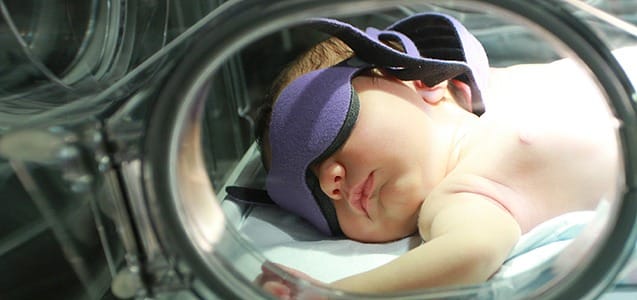
Phototherapy lights should be placed as close to the baby as possible with as much of the baby’s body as possible exposed to the light (with eyes covered), because blue spectrum light causes bilirubin to breakdown into a non-toxic form that dissolves into water which can be eliminated from the baby’s body.

Feeding babies, whether by mouth or using a feeding tube, is also extremely important in reducing bilirubin levels in infants. Bilirubin is eliminated from the body via stool and feeding infants formula, such as Nutramigen, gives their bodies a way to eliminate the bilirubin and prevent bilirubin levels from continuing to rise. Blood transfusions may be required to lower very high bilirubin levels in the most severe cases.

If bilirubin treatment protocols are not followed, or if there is a delay or interruption in treatment, a child’s life is endangered and permanent brain injury occurs.

Unfortunately, medical mistakes contribute to the incidence of kernicterus in newborn babies. Some of these preventable mistakes include:

  • Doubting the extremely high bilirubin level reported form the lab, and waiting to start phototherapy and other treatment until a second lab result either confirms or corrects the abnormally high bilirubin level first reported;
  • Removing the infant from the phototherapy lights and stopping phototherapy in order to transport the infant for testing; and,
  • Measuring the bilirubin level but not comparing to the correct normal values (for example, a 24 hour old infant with a bilirubin level of 8.5 would be in the high risk category, but a 47 hour old infant with the same, 8.5, bilirubin level would be in the low risk category).

Because kernicterus is preventable with early detection, the fact that cases continue to surface is particularly deplorable.

No baby should suffer brain damage from untreated jaundice. One of the only options for a grieving family seeking justice is to begin a medical malpractice case.

If you would like to discuss your child’s potential claim arising from kernicterus, the attorneys at Yost Legal Group are experienced professionals ready to investigate your claim with compassion and determination. For a free consultation, please call us at 1-800-YOST-LAW (1-800-967-8529).