Allergan Breast Implant Lawsuit Update

What You Need to Know About BIA-ALCL Risks

If You Were Diagnosed with BIA-ALCL After Receiving Allergan BIOCELL Implants, You May Be Entitled to Significant Compensation.

For years, women across the country trusted Allergan textured breast implants for reconstructive and cosmetic surgeries. Many believed these implants were safe. Some were told they were more stable and more advanced than other options.

These women had no way of knowing these products would be linked to a rare and dangerous cancer known as breast implant-associated anaplastic large cell lymphoma (BIA-ALCL).

BIA-ALCL is not breast cancer. It is a form of non-Hodgkin’s T-cell lymphoma that develops in the scar tissue and fluid surrounding a breast implant. Medical researchers now agree that this cancer is overwhelmingly associated with textured implants.

Among them, Allergan’s BIOCELL products have been identified as carrying the highest risk.

Despite years of warning signs, many women were not informed of this danger until after a global recall in 2019. Even now, new diagnoses continue to emerge, which is why The Yost Legal Group continues to accept clients who have been diagnosed with BIA-ALCL.

If you or a loved one has been diagnosed with BIA-ALCL after receiving Allergan textured breast implants, you may qualify to file an Allergan Biocell Lawsuit. You may be entitled to significant compensation under the growing multidistrict litigation. Call or text our experienced breast implant lawyers today for a free consultation: 410-659-6800.

In this latest Allergan litigation BIA ALCL blog post, we discuss how the cancer develops, why Allergan implants became the center of national litigation, and what women should know if they received textured breast implants.

Understanding your health is key to understanding your rights.

What You Need to Know About BIA-ALCL

What You Need to Know About BIA-ALCL

Breast implant-associated anaplastic large cell lymphoma is a cancer of the immune system. It does not form in the breast itself. Instead, it develops within the fibrous capsule the body forms around a breast implant. This distinction between the two types of cancer is critical.

According to the American Society of Plastic Surgeons, BIA-ALCL is a rare type of non-Hodgkin’s lymphoma that has been found primarily in patients with textured surface breast implants.

This detail matters. The disease is not linked to whether the implant has a saline or silicone filling. It is linked to the implant’s textured surface.

In many cases, symptoms do not appear for years. The average time between implantation and diagnosis is often reported as seven to ten years. Because of this delay, many women do not connect their symptoms to one of the implants they received years ago.

Common warning signs of BIA-ALCL include:

Persistent swelling

Fluid accumulation

Breast or chest pain

Asymmetry

Lump in the breast or underarm

When caught early, BIA-ALCL may be treated surgically. When diagnosis is delayed, treatment can involve chemotherapy, radiation, or additional surgeries.

If You Were Diagnosed with BIA-ALCL After Receiving Allergan BIOCELL Implants, You May Be Entitled to Significant Compensation

Why Textured Implants Pose a Higher Risk

Textured implants were designed to adhere more firmly to surrounding tissue. Manufacturers promoted them as less likely to shift and more anatomically stable, both of which may be true.

However, the rough surface created deep grooves that allowed bacteria and debris to collect. Over time, this environment can lead to chronic inflammation and immune system activation.

Researchers began noticing a pattern. Nearly all confirmed cases of BIA-ALCL involved textured implants. Smooth implants were rarely implicated.

As more global data emerged, Allergan’s BIOCELL implants repeatedly appeared at the center of reported cases. International regulators began to reach the same conclusion. These implants carried a significantly higher cancer risk than competing products.

The 2019 Allergan Breast Implant Recall

In July 2019, Allergan recalled its BIOCELL textured breast implants and tissue expanders worldwide following action by the United States Food and Drug Administration (FDA). By that point, regulators had been evaluating the connection between implants and lymphoma for nearly a decade.

The FDA first identified a potential association in 2011. Then, in 2016, the World Health Organization (WHO) formally recognized BIA-ALCL as a distinct disease entity.

Despite this history, many women were never warned of a cancer risk when they consented to surgery.

The recall did not require automatic implant removal. As a result, thousands of women continued living with recalled devices inside their bodies without clear guidance or long-term monitoring plans.

If you or a loved one was diagnosed with BIA-ALCL after receiving an Allergan textured breast implant, call the compassionate Allergan implant lawyers at The Yost Legal Group today. We will help you understand your rights and seek the justice you deserve. Call or text us for a free consultation: 410-659-6800.

BIA-ALCL: A (Years) Delayed Disease

One of the most troubling aspects of BIA-ALCL is its delayed onset. Women are often diagnosed many years after implantation. Some develop symptoms long after routine surgical follow-ups have ended. Others receive a diagnosis only after unexplained swelling or fluid buildup prompts further testing.

In some cases, BIA-ALCL has been diagnosed even after implants were removed.

This latency is one reason litigation remains active today. The recall did not end the danger. It simply confirmed that the danger existed.

The Federal Litigation Against Allergan

Claims involving Allergan BIOCELL textured breast implants have been consolidated in federal court in New Jersey under Multidistrict Litigation No. 2921.

As of early 2026, approximately 1,480 cases are pending in the federal MDL. That number continues to rise gradually as more women are diagnosed or undergo implant-related surgeries years after the recall.

These figures reflect federal cases only. Additional lawsuits are pending in state courts and are not included in the MDL total.

The continued growth of the litigation underscores an important point. BIA-ALCL is not a historical issue. It remains a present-day medical and legal crisis.

What the Allergan Implant Lawsuit Alleges

The lawsuits against Allergan focus primarily on failure to warn and defective design. Plaintiffs allege that the company knew or should have known that its textured implants carried a heightened cancer risk.

Despite mounting scientific evidence, Allergan continued to market these textured products as safe.

Women undergoing breast reconstruction or cosmetic surgery were not given meaningful information about lymphoma risk. Many say they would have chosen a different implant or declined surgery altogether if properly warned.

These cases are not about cosmetic dissatisfaction. They involve cancer diagnoses, invasive treatment, permanent scarring, emotional trauma, and long-term medical surveillance.

The Physical and Emotional Cost of the Defective Allergan Breast Implants

Treatment for BIA-ALCL frequently begins with the removal of the implant and the surrounding capsule. In advanced cases, lymph node removal, chemotherapy, or radiation may be required.

Medical expenses can be significant. Many women also lose income during treatment and recovery as they must take time off work or lose their jobs entirely.

Beyond the financial burden, survivors face fear, uncertainty, and the psychological impact of learning that a medical device placed in their body caused cancer.

For women who had previously survived breast cancer, this diagnosis can be especially devastating.

What Women With Allergan Textured Breast Implants Should Know

Women who received textured breast implants should not panic, but they should remain informed. Symptoms such as persistent swelling, late-onset fluid buildup, or unexplained breast changes should be evaluated by a medical professional familiar with BIA-ALCL.

A formal diagnosis is required for certain legal claims, but early evaluation can be critical to health outcomes.

Many women do not know which type of implant they received. Surgical records or a plastic surgeon’s office can often provide that information

However, if you think you may have received an Allergan textured breast implant, an experienced product liability attorney can help you request the medical records you require.

Legal Help for Women Harmed by Defective Breast Implants

Medical device manufacturers have a duty to warn patients of known risks. When that duty is breached, the consequences can be life-altering.

At The Yost Legal Group, our product liability lawyers represent individuals harmed by dangerous medical devices and pharmaceutical products. We understand the complexity of breast implant litigation and the medical science behind these cases.

If you or a loved one has been diagnosed with BIA-ALCL after undergoing surgery that involved recalled Allergan textured implants, you may have legal options. And we can help you understand your rights.

A conversation costs nothing. There are no upfront legal fees. Contact an experienced defective product lawyer to learn about filing a product liability claim. If you developed bia alcl due to a manufacturing defect or design defect, consulting a defective product law firm can help.

You deserved the truth before your surgery. If that truth was withheld, accountability matters. Call or text us today at 410-659-6800.

Allergan Lawsuit – Allergan Breast Implant Recall Attorney – BIA ALCL Lawsuit

Allergan Lawsuit Update – Allergan Breast Lawsuit – Product Injury Attorney

Wegovy and Ozempic Linked to Vision Loss

Novo Nordisk Failed to Warn Patients of the Risk of NAION and Permanent Blindness

After a thorough investigation into the link between Ozempic and Wegovy use and a unique form of vision loss, The Yost Legal Group has made the careful decision to take cases for individuals who were prescribed Ozempic or Wegovy and then suffered vision loss as a result of taking those medications.

At The Yost Legal Group, we believe people deserve full transparency about the medications they are prescribed by their doctors. Far too many individuals were never warned about a potentially blinding condition called non-arteritic anterior ischemic optic neuropathy (NAION).

Patients were told about the benefits of blood sugar control or weight loss, but not about the devastating impact on their eyesight. It is not their fault. They trusted their doctors and the billion-dollar corporation that manufactured and marketed these drugs, which sold the promise of a healthier life. But users were misled.

If you or a loved one were prescribed Ozempic or Wegovy and experienced sudden vision loss or blindness, you might have NAION. Seek a diagnosis from a medical professional. 

If you or a loved one has been diagnosed with NAION after using Ozempic or Wegovy, you deserve to know your rights. Call the trusted defective drug lawyers at The Yost Legal Group today for a free consultation: 1-800-967-8529.

Adverse Vision Changes After Ozempic and Wegovy Usage

Understanding the Risk: What Is NAION?

NAION stands for non-arteritic anterior ischemic optic neuropathy. That is a mouthful (we know), so let us put it into layman’s terms: the front part of the optic nerve in your eye loses its blood supply. When that happens, nerve fibers die, and vision goes dark. The condition works quickly, painlessly, and often in just one eye.

Recovery is often incomplete, and for many people, the vision they lose does not come back. Over time, without proper warning or monitoring, it can lead to permanent blindness.

This is not a mild “blur” side effect. This is a severe, life-altering event. Optic nerve blood flow is compromised, and once damage sets in, there is no guaranteed fix.

Who Is at Risk for Developing NAION

Why Are Semaglutides Like Ozempic and Wegovy Under Fire?

Ozempic and Wegovy both rely on the same active ingredient: semaglutide, a GLP-1 receptor agonist. These drugs revolutionized treatment for type 2 diabetes and obesity, but their popularity skyrocketed almost overnight once they were linked to weight loss.

However, not all side effects were positive, and more troubling signs emerged as more people used them for more extended periods.

Scientists in a JAMA Ophthalmology study published in February 2025 reviewed data from over 16,000 patients with type 2 diabetes and found that those on semaglutide had a 32% higher risk of developing NAION compared to those who were not taking the drug.

Semaglutides are also known to change blood sugar levels dramatically, which makes sense as they are diabetes medications. These swings, however, can shift the shape of the eyes’ lenses, which may contribute to blurred vision, retinal stress, or other complications.

For diabetic patients, rapidly dropping blood sugar can paradoxically worsen preexisting diabetic retinopathy. In some people, retinal damage from years of high blood sugar can worsen as glucose levels normalize.

These are not hypothetical risks. They are real, documented, and potentially devastating to vision.

Why Novo Nordisk Failed to Warn Patients of the Risk of NAION and Permanent Blindness

How People Were Misled. And Why That Matters

When millions are prescribed a medication, there is a responsibility to clearly spell out risks. That did not always happen here.

·     No Adequate Warning of Permanent Vision Loss: The current drug labels mention vision changes, but very few mention NAION. That is not a simple oversight. In our legally informed opinion, that is a legal and ethical failure.

·     Big Pharma Profits vs. Patient Safety: Novo Nordisk, the maker of Ozempic and Wegovy, made billions selling these drugs. But how aggressively did they communicate the full range of risks? Based upon what we are seeing, the answer is “Not nearly enough.” Patients trusted their doctors. Doctors trusted the studies. And patients took the drugs home, never the wiser that, in very rare cases, they were signing on for a potential fight to keep their sight.

·     Lawsuits Are Not About Blame. They Are About Accountability: We are not here to shame patients. We are not suing doctors, many of whom were misled themselves. This was never about “You should have known better.” This is about what a billion-dollar Big Pharma company knew about its drug and what it did not disclose to potential users. This is about what patients were never told. This is about the drug maker’s failure to warn its users about a devastating potential adverse side effect. Whether it is a failure to warn claim or a broader product liability case for a defective drug, people who lost their vision deserve their chance at justice.

Who Is at Risk for Developing NAION?

NAION is not random. There are risk factors that seem to make some people more vulnerable. Those at an increased risk are people with the following conditions:

Diabetes
High blood pressure
High cholesterol
Sleep apnea
Crowded optic nerve head

Are living with any of these conditions? Please consult a medical professional before starting semaglutide. If you are living with any of these conditions and have suffered vision loss after using Ozempic or Wegovy, seek medical attention immediately.

Has you or a loved one lost their vision after using Ozempic for weight loss or Wegovy? You may qualify to file an Ozempic lawsuit. Call the experienced product liability lawyers at The Yost Legal Group today at 1-800-967-8529.

Ophthalmologists and Neuro-Ophthalmologists Raise Concerns

Some doctors call the link between semaglutide and non-arthritic anterior ischemic optic neuropathy (NAION) “plausible but not yet proven,” which underscores how urgently we need more data. Others point out that even temporary side effects, such as blurry vision (especially in older people), need to be closely monitored.

As one retina specialist explained, blood sugar control can change the shape of the lens, which can blur vision, but the worst risk is to the optic nerve.

Experts recommend a baseline eye exam before starting semaglutide, followed by ongoing ophthalmologic monitoring during treatment, particularly for patients with eye risk factors or prior diabetic eye disease.

What Ozempic and Wegovy Maker Can Do

When lawsuits are filed, they do more than seek justice for affected individuals. These cases can force a change that protects potential patients in the future. Common industry-wide outcomes from mass tort lawsuits against defective drug manufacturers include:

Better Labeling: We can demand that their medication guides include a clear, bold warning about the risk of NAION and permanent vision loss.

Stronger Monitoring Protocols: Suits can push for mandatory eye exams and closer follow-up for people starting semaglutide.

Reinforced Accountability: When pharmaceutical companies are held to account, it sends a message: prioritizing profits over people’s health is not acceptable.

Adverse Vision Changes After Ozempic/Wegovy? What to Do Now

1.       Seek Medical Evaluation Immediately:

If you have noticed vision changes (even slight blurriness or a haze), reach out to an eye doctor. Mention that you have used semaglutide (Ozempic or Wegovy). Ask about the risk of NAION and whether you should be monitored more closely.

2.       Document Everything:

Keep notes of when you started the medication, what dose you used, when vision symptoms began, and all your medical records (eye exams, ophthalmologists’ notes, and any vision-related tests).

3.       Talk to a Lawyer Who Understands These Cases:

Our experienced product liability law firm handles a wide range of product liability cases. We know how to review your medical timeline, connect the dots, and hold large companies accountable. Ozempic blindness claims and GLP-1 drugs vision loss claims are being reviewed by our legal team.

You took a medication to improve your life, to manage your diabetes or weight and you followed the instructions. You trusted your healthcare providers and the drug manufacturer. But you were not told about the potential risks and side effects, including severe eye conditions.

How The Yost Legal Group Can Help

When drug manufacturers fail to warn people of serious, permanent risks, they put profit over people. They fail in their responsibility to the very individuals who helped them profit.

At The Yost Legal Group, we refuse to let that stand. We will press for accountability. We will demand transparency. And we will fight to make sure no one else has to face the darkness alone.

If you or someone you know was prescribed Ozempic or Wegovy and then suffered sudden vision loss or blindness, contact The Yost Legal Group. Do not wait. There is no time to delay when your vision is at stake. Call 1-800-967-8529 for a free case consultation with a compassionate defective drug attorney.

Semaglutide Lawsuit – Ozempic Lawyer – Wegovy Lawyer

Wegovy Lawsuit – Blindness From Ozempic – Weight Loss Medications

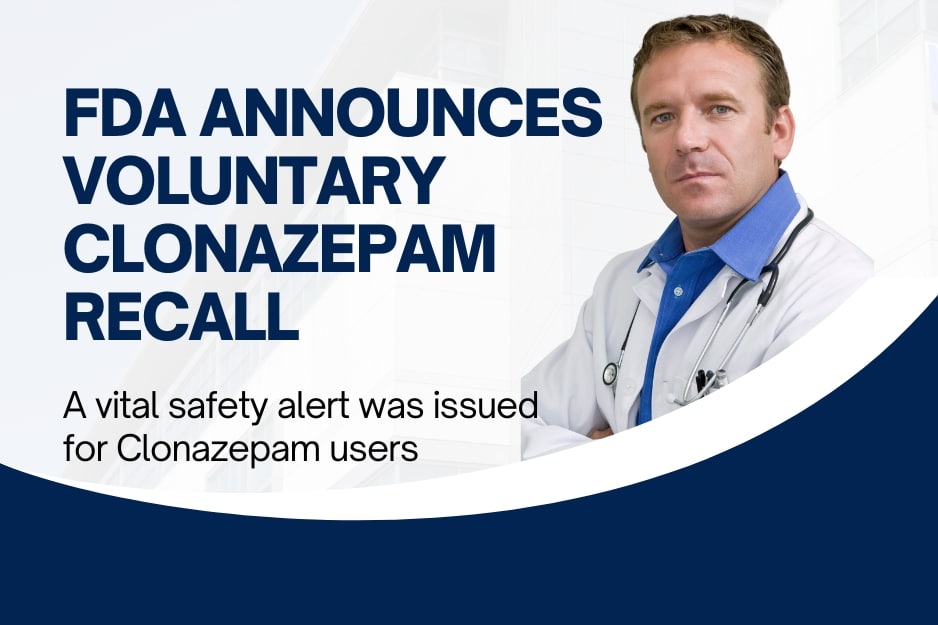
FDA Announces Voluntary Clonazepam Recall

The Benzodiazepine, a Generic Form of Klonopin, Had a “Life-Threatening” Labeling Error

A vital safety alert was issued for Clonazepam users. Endo, Inc., a pharmaceutical company based in Pennsylvania, has recalled its seizure medication, Clonazepam tablets.

The recall is due to a mistake in labeling the product strength on the carton. Such a serious error could lead to life-threatening consequences for thousands of users.

The recall is part of an FDA investigation. Endo, Inc. expanded its initial voluntary recall from July 16. The FDA announced the expanded recall in an alert on Nov. 19.

Clonazepam pillss recalled from the market

Urgent Warning for Clonazepam Users—Verify Your Dose Now

If you use clonazepam benzodiazepine, check your product’s labeling immediately. People who take a higher dose of Clonazepam could face serious health risks, including:

–      Extreme drowsiness

–      Confusion

–      Dizziness

–      Slowed reflexes

–      Lack of coordination

–      Low muscle tone

–      Life-threatening respiratory depression

There is a significant chance of life-threatening respiratory depression:

  • Particularly for individuals with lung conditions
  • Those already prescribed high doses of Clonazepam
  • Patients taking other medications that suppress breathing

If you have experienced a severe adverse reaction from Clonazepam, contact 1-800-967-8529 for a 100% Free and Confidential consultation. The Yost Legal Group is a highly experienced Product Liability law firm. Our Clonazepam lawyers will investigate what happened and fight to seek the justice and financial compensation you deserve.

 Clonazepam can cause adverse reactions

What Is Clonazepam?

The drug Clonazepam is a generic drug under the benzodiazepine class of depressant drugs.

Depressants: These types of drugs affect the brain’s activity. They slow neurotransmission levels and decrease electrical activity in the brain. Depressants also inhibit an individual’s ability to feel arousal and stimulation.

This reduction in brain activity is why depressant drugs can be effective when used correctly. A medical professional prescribes them to relieve disorders and symptoms such as:

  • Anxiety disorders
  • Depression
  • Insomnia
  • Obsessive-compulsive disorder
  • Seizures

Alcohol, benzodiazepines, and cannabis are some of the most common types of depressant drugs.

Benzodiazepines: Benzodiazepines, known as “benzos,” are a class of depressant drugs. This type of drug derives its name from its chemical compound, which is a fusion of benzene and diazepine rings.

Medically, benzodiazepines are most often used to treat anxiety and panic disorders, insomnia, and seizures. Common types of benzodiazepines include alprazolam (Xanax®), clonazepam (Klonopin®), and diazepam (Valium®).

Clonazepam is a generic benzodiazepine sold under the brand name Klonopin®, which more people are probably familiar with. This recall, however, pertains only to the generic version.

Clonazepam side effects, file a Clonazepam lawsuit

Severe Health Risks Linked to Incorrect Clonazepam Dosage

Clonazepam is often used to treat anxiety disorders, bipolar mania, and seizures. Anyone with these ailments and conditions needs regular help. For some people, it might be difficult to make it through a day without their prescribed medication.

Pharmaceutical companies have a clear duty to ensure their products are safe. This includes items people apply, ingest, or inject. They must also make sure their product labels are accurate. These labels tell people how to use their medications safely.

The recall for Clonazepam relates to the tablet version, as the drug is most often taken orally.

The packaging had a labeling mistake. The company said it was “possibly life-threatening.” This was also noted in the FDA safety warning. If a user took the wrong amount of the medication, it could be dangerous. This happened because the number of milligrams in each tablet was incorrect.

If you or someone you know may have been affected, seek medical attention immediately. Contact The Yost Legal Group’s “Dangerous Drugs” division to learn about your legal rights.

Life-Threatening Clonazepam Risks—Know Your Legal Rights

This was no small mistake. In 1960, Clonazepam was patented and became available in the United States in 1975. Doctors have prescribed the drug often since it has been on the market for decades.

According to ClinCalc.com, Clonazepam was the 57th most prescribed drug in the United States in 2022. More than 11.5 million prescriptions of Clonazepam were made out to nearly 2 million patients in 2022.

This mislabeling put millions of people at risk. Furthermore, it was not the first time Endo was derelict in its duties regarding labeling its clonazepam packaging.

The product recall focuses on Clonazepam drug side effects, one of which can result in death from Clonazepam. The product liability lawyers at The Yost Legal Group are here to help. Many FDA recalls exist; the highest level occurs when the FDA issues an FDA Black Boxed Warning. This usually happens when a company is about to remove a drug from the market.

The First Clonazepam Recall of 2024

On July 17, 2024, the FDA published a safety alert that it voluntarily recalled many orally disintegrating drugs due to mislabeling.

Endo announced that the lot it was recalling included packaging that under-reported the strength of each tablet:

“The product lot [550147301] is being recalled due to mislabeling where an incorrect strength appears on the cartons of some packs to show the product strength as 0.125 mg and not 0.25 mg due to an error at a third-party packager.”

Regardless of the mistake by the “third-party packager,” Endo bears responsibility as the drug manufacturer and the employer of the company that packages its medication.

However, it was just one lot and one recall. As Endo noted in its statement, “to date [the company] has not received any reports of adverse events associated with this product lot recall.”

But it would not remain just one lot and one recall for much longer.

If a defective drug harmed you or a loved one, you may have a case and be entitled to compensation. Call or text the experienced defective drug lawyers at The Yost Legal Group today for a free consultation: 410-659-6800.

The Second Clonazepam Recall of 2024

As previously stated, Endo voluntarily recalled Clonazepam in November 2024, and the FDA ran a safety alert. The second recall, however, was not just to announce the recall of a second lot. The alert included a whopping 16 lots of the drug.

The table below includes the product description (Clonazepam Orally Disintegrating Tablets), the National Drug Code number, and the lot number.

Potential Product Description / NDC Number  Lot Number Expiry Date

Clonazepam ODT, USP (C-IV) 2mg / 49884-310-02 550176501 Feb 2027

550176601 Feb 2027

Clonazepam ODT, USP (C-IV) 0.125mg / 49884-306-02 550174101 Jan 2027

Clonazepam ODT, USP (C-IV) 0.25mg / 49884-307-02 550142801 Aug 2026

550142901 Aug 2026

550143001 Aug 2026

550143101 Aug 2026

550143201 Aug 2026

550143301 Aug 2026

550143401 Aug 2026

550147201 Aug 2026

550147401 Aug 2026

Clonazepam ODT, USP (C-IV) 1mg / 49884-309-02 550145201 Aug 2026

550175901 Feb 2027

550176001 Feb 2027

550176201 Feb 2027

Again, Endo placed the blame on its third-party packager:

“Endo’s ongoing investigation has identified the possibility that the Clonazepam product lots listed below contain a limited number of cartons printed with the incorrect strength and National Drug Code (NDC) code due to an error by a third-party packager.”

Serious Side Effects from Clonazepam? We Can Help

Endo is responsible for its medication, and for the third-party packager/s, it hires to label its products. Although the actual medication is not defective, it is still vital to ensure the labeling is correct so that people using the drug can do so safely.

This repeat of negligence with mislabeling puts real people at risk. As of 2022, nearly 2 million people were prescribed Clonazepam, and now there are 16 recalled lots. Endo put its customers in harm’s way.

We do not know how the packages got the wrong information. However, we have seen how small details can be missed at big pharmaceutical companies. Some companies cut corners to save money, which harms people. The result is almost always putting innocent people at risk.

Clonazepam Adverse Reaction? Seek Justice Today

The Yost Legal Group has a long history of representing individuals and their families after a defective drug altered someone’s life.

Drug companies are billion-dollar multinational corporations with some of the best pharmaceutical lawyers in the world. A skilled and experienced defective drug lawyer must handle the complex legal issues when suing a Big Pharma company.

That is where The Yost Legal Group’s accomplished defective drug lawyers factor into the equation. As leading personal injury attorneys, we file product liability lawsuits every day. Let us file your Clonazepam claim.

Many cases involve prescription drugs because of “failure to warn” and “serious pharmaceutical side effects.”

If a defective drug has harmed you or a loved one, please get in touch with The Yost Legal Group today. Our defective drug lawyers will start working on your case right away. They will help you understand your rights to seek the compensation and justice you deserve. Call or text us at 410-659-6800.

All consultations are free, and you do not owe us anything unless we take on and win your case.

Defective Products Lawyers – Defective Products Law Firm – Products Liability Attorneys

Products Liability Attorney Recall – Clonazepam Warnings –

Depo Provera Lawsuit

A new study raises concerns about the potential link between Depo-Provera® contraceptive injections and meningioma brain tumors. Research suggests women who have used Depo-Provera® long-term may face an increased risk of developing this condition. Do you qualify to file a Depo Provera lawsuit?

If you or someone you love has been diagnosed with a meningioma after using Depo-Provera®, you may qualify to file a Depo Provera lawsuit. Let us help you seek the justice and financial compensation you deserve.

Contact The Yost Legal Group today at 800-967-8529 for a free consultation. Our experienced Depo attorneys are ready to help you explore your legal options. Don’t wait—call now.

brain mass meningioma side effects from depo birth control shot

Know Your Rights After Depo-Provera Meningiomas Diagnosis

  • Prolonged Use of Depo-Provera® May Increase Risk of Brain Tumors
  • Recent research highlights an important concern for women using Depo-Provera® as a contraceptive. Studies have shown that extended use of Depo-Provera® significantly increases the risk of developing meningioma, a type of brain tumor.
  • 5.6x Higher Risk with Depo-Provera Women who use Depo-Provera® for more than one year face a 5.6-times higher risk of developing meningiomas, according to a study in the British Medical Journal. If you’ve experienced health complications linked to Depo-Provera®, seek guidance today.
  • Meningiomas May Require Surgical Treatment – Meningiomas are tumors that can grow and put dangerous pressure on the brain. These growths often demand invasive surgery, which comes with serious health risks and potential complications. If you or a loved one are facing a diagnosis, consult a healthcare specialist immediately for guidance and treatment options. Early intervention is critical.
  • Common Symptoms of Meningioma: Persistent headaches, vision issues, seizures, hearing loss, or weakness in the limbs could be symptoms of a meningioma—a type of brain tumor. These signs should not be ignored. If you’re experiencing any of these symptoms, consult a healthcare professional immediately for evaluation. Early detection can make all the difference.
  • Protect Your Right to Compensation: If you’ve developed a meningioma after using Depo-Provera®, you could be eligible for compensation. This may cover medical expenses, lost wages, pain and suffering and more.
  • Act Quickly to Protect Your Rights – Statutes of limitations impose strict deadlines. Delaying action could jeopardize your legal claim.
  • Get a Free Consultation Today – Contact us now to confidentially discuss your case and explore your legal options with our experienced team.

depo provera lawsuit, depo shot side effects

Possible 5.6x higher risk of meningioma with Depo-Provera® use.

Recent Study Links Depo-Provera® to Meningioma

Depo-Provera® is a hormonal birth control method delivered via injection every three months. It contains medroxyprogesterone acetate, a synthetic form of progesterone, and works by preventing ovulation and changing the uterine lining to reduce the chances of pregnancy.

depo provera birth control shot side effects

Key Information About Depo-Provera® You Need to Know

  • Purpose: Depo-Provera® is a trusted, long-lasting contraceptive designed to prevent pregnancy effectively.
  • Administration: It’s administered through an intramuscular injection in the arm or buttock every 12 weeks, ensuring consistent protection.
  • Effectiveness: When used as directed, it is over 99% effective in preventing pregnancy, offering reliable peace of mind.
  • Popularity: This method is favored by millions of women globally for its convenience and highly dependable results.

A recent study published in the British Medical Journal in March 2024 revealed concerning findings about Depo-Provera®, a widely trusted contraceptive.

The study indicates a potential link between prolonged use of Depo-Provera® and an increased risk of brain tumors, specifically meningiomas.

Women who have used Depo-Provera for over a year may face a significantly higher risk of developing these tumors. If you or a loved one has been diagnosed with a brain tumor after using Depo-Provera®, it is crucial to act now.

Contact The Yost Legal Group to learn more about the Depo Provera litigation. Contact us for a FREE, no-obligation consultation today.

The experienced defective products attorneys at The Yost Legal Group are here to support you. We are helping women across the U.S. file dangerous drug lawsuits and seek justice. Call us today at [Phone Number] for a free consultation. Don’t wait—your health and rights matter.

Key Findings on Depo-Provera® and Meningioma Risk

A new study reveals significant findings about the connection between Depo-Provera® and intracranial meningiomas. Here’s what you need to know:

  • Higher Risk Identified: Women who used Depo-Provera® for over a year faced a 5.6x increased risk of developing intracranial meningiomas compared to women who did not use it.
  • Reliable Data: The analysis was conducted on medical records from over 100,000 women through the French National Health Data System.
  • Long-Term Use Concerns: Risks were significantly higher among women who used Depo-Provera® for extended periods, pointing to potential dangers with prolonged use.
  • Specific to Depo-Provera®: Other progestogens, such as progesterone or levonorgestrel intrauterine systems, did not show an increased risk, underlining a unique concern with Depo-Provera®.

Key Implications of the Depo Side Effects Findings

  • Substantial Risk Increase: The study reveals a 5.6-fold increase in the risk of meningioma linked to the use of Depo-Provera®, underscoring a significant and alarming association.
  • Prolonged Use is Riskier: Long-term users face an escalated risk, highlighting the critical role duration plays in user vulnerability.
  • Insufficient Awareness: Many women may have been exposed to this elevated risk without proper disclosure or warnings.
  • Call for Immediate Regulatory Action: These findings signal an urgent need for regulatory agencies to reassess the safety of Depo-Provera®, implement additional warnings, and evaluate potential restrictions.

Your Legal Rights After a Meningioma Diagnosis

Pharmaceutical companies must prioritize the safety of their products and fully inform consumers about any potential risks associated with their drugs.

If you’ve been diagnosed with a meningioma after using Depo-Provera®, understanding Pfizer Inc.’s responsibilities as the drug’s manufacturer is key.

Failures to identify and disclose the risk of meningiomas early in Depo-Provera’s market lifecycle may have caused significant harm to consumers. It’s critical to know your legal rights and take action now.

Filing a Depo Provera lawsuit is the first step toward seeking justice. Contact The Yost Legal Group at 1-410-659-6800 for a free consultation.

Our experienced Depo Provera lawyers are here to provide guidance, support, and fight for justice on your behalf. Don’t wait—your path to justice could begin today.

Potential Failure to Properly Test the Product

  • Insufficient Research: There may have been a lack of thorough studies to assess long-term neurological effects.
  • Ignored Warnings: Early reports of adverse effects might have been overlooked, raising concerns about due diligence.

Possible Failure to Provide Adequate Warnings

  • Misleading Representations: Marketing efforts could prioritize benefits while downplaying serious risks, potentially putting consumers at risk.

Market Effects of Depo-Provera®

  • Failure to Report Adverse Events: Evidence suggests a possible delay in the timely reporting of meningioma cases linked to the use of Depo-Provera®.
  • Insufficient Action on Emerging Evidence: Reports point to a lack of prompt updates to warnings or further research being conducted to address the newly identified risks.

The Yost Legal Group Will Protect Your Rights

If you or a loved one have experienced adverse effects, you may have a claim against the drug manufacturer. Contact The Yost Legal Group at 1-410-659-6800 for a free consultation. Our trusted team is here to provide guidance and advocate for your rights. We will file a Depo Provera lawsuit on your behalf.

Free case evaluations are now available for women who developed meningioma after using Depo-Provera®. Contact us today to explore your legal options and seek the justice you deserve.